Showing posts with label Google. Show all posts

Thursday, October 29, 2015

Samsung, Google And Apple To Face Competition From Chase Pay

JP Morgan Chase is set to launch its very own smartphone payment method, according to a recent statement from the company. This move will put JP Morgan Chase in direct competition with rival services from big name companies like Apple, Google, and Samsung.

Known as Chase Pay, this payment method will be based on CurrentC, which is a retailer-led mobile payment system. What's interesting is that the tech minds of the world have largely dismissed CurrentC for its reliance on barcodes as opposed to NFC (near-field communications) technology, which is seen as more sophisticated and which is also the technology that Apple, Google, and Samsung have all adopted.

The app displays a barcode on the customer's smartphone screen that the retailer then scans in order to complete the payment. In addition to that, there is also a version that works online. Sure the barcode method may not be super fancy and cool like the tap payment NFC system though it does mean that Chase Pay will be more compatible with a far larger number of smartphones. Users that have phones that are incompatible with  other payment systems could discover that their phones work with Chase Pay just fine.

The Chase Pay platform will debut to Chase Bank's credit, debit, and pre-paid card account holders, which now number 94 million, and will also tie into any of their retailer loyalty cards. This pairing is really good for CurrentC as Chase is one of the largest bank and card issuers in the country. This will also ensure that CurrentC will see a huge boost in the market while also ensuring that Chase Pay is accepted at a large number of major retailers.


CurrentC is currently being developed by Merchant Customer Exchange (MCX), which is a consortium of some of the largest retailers in the United States, including Wal-Mart, Target, Shell, Exxon, CVS, Dunkin Donuts, and Sears. One of the major driving forces behind this development was the desire of retailers to prevent companies like Apple and Google from gaining a look at their businesses and the purchases of their customers. In addition to that, CurrentC also doesn't impose transaction fees.

CurrentC has yet to officially launch, which means that Chase Pay will be unable to launch until CurrentC does. Trials of the technology are currently taking place though that doesn't really offer a solid time frame on when this technology will get in the hands of consumers. The only date we have to go off of is one that JP Morgan Chase announced, which was mid-2016.

Content originally published here
Sharing this story on Social Media? Use these hashtags! #Smartphones #NFC #SmartphonePayments #ChaseBank #ChasePay #CurrentC

Monday, May 11, 2015

Make Google Chrome Use Less......Everything

Chrome, Google's internet browser, was originally designed to stay out of your way and be a minimal browser, but now it's an entire application platform. Chrome manages to burn through a lot of battery life, especially on Macs. Also, if you have a PC with low amounts of RAM, Chrome seems to take up a lot of memory. Even after you close it, Chrome still continues to run in the background. It continues to take your battery life and a lot of your memory, so when you really want to close Chrome fully, you have to right click the Chrome icon and select Exit Chrome. If you installed Chrome apps that continuously need to run in the background, you may just want to disable it. All you need to do is right click the icon for Chrome system and uncheck "Let Google Chrome run in the background." This will shut down Chrome altogether when you close your Chrome browser windows.

If you haven't noticed by now, browser extensions will completely slow down your browser, they take up more of your memory, and drain you system resources. If you are using Chrome, you can what the browser extensions are doing to your system by clicking the menu icon, going to More tools, and clicking Task Manager. The items that appear that begin with "Extension:" are the browser extensions that Chrome is running. Uninstalling an extension that's lets say using over 100 MB of RAM, that's draining your battery power dramatically, and if you don't really need it could help drastically.

Every browser extension doesn't show up in this list, however. Some of them don't run as their own processes and some include scripts that run when you are loading web pages that provide their features. Running these other scripts will take more CPU and help drain more of your battery so make sure you are uninstalling these extensions that seem to be taking up resources in the task manager.

You may see a "Background Page" if you check your Chrome Task Manager. It's different than an extension or app and they consume memory and CPU resources. For example the Google Drive background page appears when you enable offline access to your documents in Google Drive. It causes a background page to continue running even if you close all your Google Drive tabs. This background process syncs your offline cache with Google Drive. If you don't really use the offline documents feature, then you could go to the Google Drive website, go into the Settings screen, and be sure to uncheck the Offline option. You won't have to deal with a background page, but you won't have offline access to your Google Drive documents.

Looking for a Quote on a Tablet Rental for Your Next Business Event? Rentacomputer delivers Tablet Rentals nationwide to any convention center, conference center, hotel or event!

Another thing to be sure to do, in Chrome, to help save some of your battery is to enable click-to-play plug-ins. All you have to do is open Chrome's Settings page, click "Show Advanced Settings," then click "Content Settings," and finally under Plug-ins click "Let me choose when to run plugin content." It will keep Adobe Flash and other plug-ins from running in the background, because a lot of Flash advertisements popping up will help destroy your battery. By enabling click-to-play plug-ins, it will only allow specific Flash content to run, as well as doing the same with other plug-ins.

Saving memory can become a bit of an issue and running multiple tabs at once can take a lot of that memory. If you want to save memory and some battery power then try not to have a bunch of tabs opened. This can have too many web pages running in the background and use CPU resources, as well as taking up your memory and battery life. Just bookmark or save some web pages in a read-it-later service like Pocket, to prevent some of those pages from constantly running.

Chrome can be a bit of a hassle with all of its browser extensions and features. You could always try running a different browser like the Safari browser. It's way better on your battery life when using Macs. If you're using Windows on a PC with a low amount of RAM, then running Mozilla's Firefox will help take up less of your memory. Also using Internet Explorer on Windows will help your battery last longer. If you're just using a modern PC, then using up a lot of memory shouldn't be an issue if you have enough of it. The major issue of running Chrome is how it effects your battery life. Just be sure to uninstall those unnecessary browser extensions and close those tabs you don't NEED open and you should be just fine.

Content originally published here

Tuesday, April 14, 2015

New Asus Chromebook Flip with Touchscreen

Google has been putting their OS on a lot more devices lately, like the Asus Chromebook Flip and the Asus Chromebit. This spring, the Chromebook Flip comes out with a touch screen that rotates 360 degrees. The Chromebit comes out this summer, and it will let you use the Chrome OS on your HDTVs.

The Asus Chromebook will have a price tag of $249, and looks a lot like one of the Yoga notebooks. It has a 10.1 inch IPS display and weighs less than 2 pounds even with it's all metal chassis. It will be powered by a Rockchip 3288 processor with 2GB of RAM and 16GB of eMMC flash memory. There will also be a more expensive version that will have 4GB of RAM and 16GB of SSD storage. It will have 802.11ac Wi-Fi and Bluetooth 4.0, and will be able to last for up to 10 hours on a full charge.

Right now the Chrome OS is not optimized for touch screens yet, so it is a bit unusual that they added one to this notebook. Not only that, but it's pretty odd that they would add a touch screen to a budget system at all. Hopefully it works out great and the added feature really pays off.

As far as what's under the hood, the Chromebit has  pretty much the exact same stuff as the Chromebook Flip actually. It is a little bit bigger than a regular thumb drive and will have an HDMI port and a USB 2.0 port that it will be powered by. It will be able to connect to the Internet via 802.11ac Wi-Fi and it also has Bluetooth capabilities.


Asus is not the only company that is coming out with new Chromebooks though. Haier and Hisense have both announced 11 inch Chromebooks that seem to have the same internals as the new Asus coming out this spring. The only major difference is that they will cost about $100 less than the Asus. Of course, it doesn't look like they will have a touch screen, but if the Asus touch screen doesn't go over well because of the operating system, then you might spend $100 dollars less and have something that is less troublesome. I guess we will find out soon enough when we can get our hands on them!

Content originally posted here

Friday, September 19, 2014

Move Over iPhone 6, Android One Is A More Serious Threat (In The Low-Cost Market)

When it comes to smartphone operating systems there are really only two big names, Android and iOS (but there is a company that rents them all). I mean, there are others, but they have yet to hit the popularity and esteem of these two. One such operating system is that of Windows Phone. While Windows Phones aren't necessarily bad devices, they simply have had a rough time surpassing Android and iOS devices. Unfortunately for Windows Phone things don't look to be getting any easier. Even though Apple has released the new iPhone 6 and iPhone 6 Plus its Android that Windows Phone should really be fearing.

Google's Android One project could very well be the final nail in the coffin for Windows Phone, making sure that these devices never become a serious threat to the smartphone market. Apple's newest devices are high-end phones with high-end prices, as usual. The iPhone 6 comes in 16GB, 64GB and 128GB varieties that run $199, $299 and $399, respectively. The iPhone 6 Plus comes with the same three versions with $299, $399 and $499 price tags. 

These numbers make Microsoft extremely happy as the company as all but given up on high-end smartphones. As a result, Microsoft is starting to target consumers that are a little more careful with their money and ones who aren't necessarily willing to for over that kind of cash for a smartphone. The flagship of this new business model is the company's Lumia 830 Windows Phone which comes with a 1.2GHz quad-core Snapdragon 400 processor, 1GB of RAM, 16GB of storage and a 5" screen. 

Corporate Vice President of Mobile Device Sales at Microsoft Chris Weber was quoted recently at the IFA Electronics Show in Berlin stating that the new marketing strategy for Windows Phone would be pricing. "We're going to challenge Apple and Samsung and expose the premium they are charging for a phone," Weber stated. 

That's the precise reason Microsoft should be worried about Android One. Android One is a project from Google that is designed to reduce the cost of Android phones. The company's target is the developing world, where Nokia used to have a very large presence and where Microsoft is hoping to use the Nokia name to grab a market share with low-cost Windows Phones. 

Google, on the other hand, is making it very easy for phone manufacturers to produce low-cost phones that will run stock Android without any modifications. To make matters worse for Microsoft, Google has already lined up Acer, Alcatel OneTouch, Asus, HTC, Intex, Lava, Lenovo, Panasonic and Xolo along with chipmaker Qualcomm. Android One will launch first in India and then make its way to Indonesia, the Philippines and other South Asian countries by the end of this year. 

Google currently owns nearly 80% of the world's smartphone market. The biggest of these new markets are in developing countries, which is where Windows Phone needs to increase its profits. However, with Android One on the prowl it's unlikely that Microsoft will be able to make a dent in the market. While everyone is gawking at the new iPhones from Apple, Microsoft will be sweating bullets over Google's low-cost Android One phones.

Did I mention a company that rents all of the major operating systems?
They Go By www.Rentacomputer.com,
Tech Travel Agents Are Standing By For A Quick Quote! Call 800-736-8772

Thursday, November 29, 2012

Share files on Gmail up to 10GB with Google Drive

Have you ever tried to send an attachment through Gmail and the file was too big? I’m sure many of you have, as their attachment size limit used to be only 25MB. After Microsoft introduced 10GB attachments in Hotmail, Google was behind the curve.

Now Google has integrated its cloud-based service: Google Drive into Gmail, allowing users to transfer files up to 10GB in size.
Google Drive was introduced by Google in April, allowing users to store up to 5GB for free; each additional 25GB costs only $2.49.

After users opt-in for the new “Compose” feature for Gmail, you can select (or even drag and drop) files from your computer up to 10GB in size. Not to mention with the new feature users can navigate throughout Gmail more quickly and easily all while composing a message, with the new compose pop-up window (much like chats only bigger).

Also with the new compose feature, users will now see a contact picture from Google+ of the recipient entered in the “To, Cc, or Bcc” line.

Additionally, your recipient will always have access to the most up-to-date version of your file stored on Google Drive; you or your recipient can now make changes back and forth to the shared document and all of the message recipients will see the changes to the file next time they access the document online.

Much like DropBox or SkyDrive, with Google Drive you can now access all of your stored files anywhere, anytime. But look out DropBox and SkyDrive, Google specializes in integrating all of its services, and with the new Gmail integration, Google Drive should gain further popularity.

Sources: Gmail Blog- Introducing the new compose in Gmail, Gmail and Drive – a new way to send files

Sunday, March 4, 2012

The Child Pad Tablet is on Its Way


On Thursday, March 1 Archos announced that it will soon be releasing a tablet that is designed specifically to provide a fun and safe experience for children.

The tablet is being called the Child Pad. The 7-inch tablet is light-weight and perfectly made to fit comfortably in a child’s hands. Although the specs are not amazing, the tablet will run Google’s latest OS, Android 4.0 Ice Cream Sandwich.

The Child Pad is the first tablet that Archos has ever created to directly market children. It features a 1-Ghz processor and 1GB of RAM. As of right now, Archos has not released information concerning processor type, internal storage capacity or screen resolution.

Based on the available information, it seems as though the Kids App Store that will be available on the tablet will be powered by AppsLib instead of Google. The store will offer children 14 categories with more than 10,000 apps.

"As a pioneer in the portable audio and Android tablet market, we realize the importance of providing a tablet that can offer hours of entertainment for all ages, especially kids," says Henri Crohas, Founder and CEO. "Archos strives to offer great tablets with only the best of features at affordable prices and we expect this tablet to bring a smile to the faces of kids and parents everywhere."

According to Archos, the Child Pad will comply with both the CIPA and COPPA regulations. This will help to ensure a safe tablet experience for each and every child. The company said that there will be parental controls and safe web browsing. The security will be provided by Edition Profil, which is a developer of parental control software.

Archos said that the Child Pad will be available sometime before the end of March, and it will cost consumers $129.

Sources: Tom's Hardware - Archos Introduces Child-Friendly Android ICS 7-inch Tablet and PCMag - Archos Unveils a $130 Ice Cream Sandwich Tablet for Kids


DVD Video Projectors are exactly what they sound like, a combination unit that combines a DVD media player with a video projector, cutting out the need for multiple pieces of electronics and wiring.

Thursday, February 2, 2012

Google Announces New "Bouncer" Security


On Thursday, February 2 Google announced that it was adding some new security for its Android Market. This new security is being called the Bouncer. It will scan Android apps for any possible malware.

Google went on to say that Bouncer will scan all new and existing apps as well as the developer’s accounts. All of this will be done "without disrupting the user experience of Android Market or requiring developers to go through an application approval process," said Google's vice president of engineering, Hiroshi Lockheimer.

"Here's how it works: once an application is uploaded, the service immediately starts analyzing it for known malware, spyware and trojans," Lockheimer wrote in a blog post. "It also looks for behaviors that indicate an application might be misbehaving and compares it against previously analyzed apps to detect possible red flags."

Google will run every single app through the scanning process and alert users to anything that might be a potential issue. Developers' accounts will also be examined to make sure that any banned individuals do not try to come back.

Android malware issues were a big topic last year. Google does not have a particularly strict app approval process for the Android Market, which does make it a much more open environment; however, unlike the Apple App Store, the store is much more susceptible to malicious apps.

"We've chosen not to be the gatekeeper," said Alan Davidson, the former director of public policy at Google. "We don't generally go back and try to make sure that every app does what it says it's going to do. [Google is] really trying to maximize the ability of small app developers to get online."

According to data that was released by Juniper Networks, the number of malware issues from the Android Market jumped 472 percent just between July and November 2011. However, Google’s report was very different than Juniper Networks' report. Google said recently that in the second half of 2011 it saw a 40 percent decline in the downloading of potentially malicious apps on the Android Market.

"This drop occurred at the same time that companies who market and sell anti-malware and security software have been reporting that malicious applications are on the rise," Lockheimer wrote. "We know the rate is declining significantly."

Sources: Google Blog - Android and Security and PCMag - Google 'Bouncer' Now Scanning Android Market for Malware


SMBnow.com is news of, for and by SMBs!
SMBnow.com... The Small & Medium Business Magazine!

Sunday, October 23, 2011

Google Now Allowing Education and Business Chromebook Customers to Pay Upfront

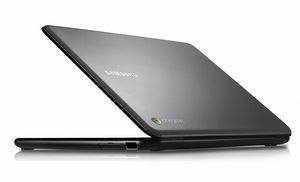
Google ChromebookOne of the biggest things to hit the tech world a while back was the fact that Google, the search engine superpower, was expanding into hardware with its all new Chromebooks, all new cloud-focused laptops aimed at the education and business sectors. What made the announcement even more interesting was the fact that Google would offer business and education clients a 3-year monthly payment subscription-based payment plan, charging no upfront costs whatsoever. However, Google has just recently announced that it will begin allowing businesses to pay for their Chromebooks in full upfront.
Google has stated that it discovered some businesses were simply unable to budget for a three-year commitment requiring annual cycles. As a result of these findings, Google is offering education and business customers the choice to pay upfront for their Chromebook with one-year access to a web-based admin management console, phone support and hardware warranty. After the initial year, customers will have the option to pay a monthly fee for the second and third year of management console access and support.

Customers in the education industry are able to get their hands on a Chromebook for $449 if they choose the WiFi option or $519 if they go with the 3G option. Business customers will have to pay $559 for the WiFi version and $639 for the 3G version. The changing policy for the education and business sectors is notable for many reasons, primarily for the fact that we have yet to hear anything from Google about success in this market. I know it has only been four months, but with the way information flies around the internet you would expect to have heard something by now even if it was leaked information or a rumor.

Nevertheless, Google is still very well known for its policy of launching during a beta and it appears as if that applies to the company's enterprise business models as well. I guess we will just have to wait and see how this business venture plays out for Google, though I don't think the company will take any serious financial dips if the project doesn't quite meet expectations.

Source: The Next Web - Google drops Chromebook business, education subscription-only policy, lets them pay up front

Sunday, July 24, 2011

Business Profiles for Google+ in High Demand

Google+The demand for Google+ business profiles has reached an all-time high, which has lead Google+ leader Vic Gundotra to acknowledge that Google has indeed been caught off guard. However, Gundotra did vow to fix this and that the solution is being fast-tracked. Google+ is currently designed for personal profiles only, except in cases of companies that have been hand picked by Google to participate in the program for the development of business profiles.

Because of this, Google has been deleting unapproved Google+ business profiles which has prompted a series of critical posts from Danny Sullivan, editor of the Search Engine Land blog. Sullivan's business profile was among one of those removed from Google+. In a comment to a post by Sullivan, Gundotra wrote that Google should have anticipated the frustration among those who want a Google+ business profile. "This is my fault. I prioritized other things first. So when Danny says Google screwed up, he is right," Gundotra wrote.

In addition to that, Gundotra added, "We prioritized making a great experience for people first. None of our internal models showed this level of growth. We were caught flat-footed. This growth is very enticing for people/brands who crave an audience. We are doing all we can to accelerate the work to properly handle this case. Please give us just a little more time."

In a post by Christian Oestlien, one of Google+'s product managers, he stated that tens of thousands of organizations applied to be in the business profiles of Google+. Oestlien also stated that Google hopes to allow for the creation of business profiles in the coming months, much sooner than originally planned. "Your enthusiasm obligates us to do more to get businesses involved in Google+ in the right way, and we have to do it faster. In the meantime, we ask you not to create a business profile using regular profiles on Google+. The platform at the moment is not built for the business use case, and we want to help you build long-term relationships with your customers. Doing it right is worth the wait."

In the meantime, Google will continue to disable business profiles, according to Oestlien, who added that a work-around is to "find a real person who is willing to represent your organization on Google+ using a real profile as him-or-herself." For those of you who do not know, Google+ is the search engine giant's Facebook. The service is currently in a limited beta and is only allowing a certain number of users in and by invitation only. It is believed that Google+ currently has somewhere between 15 million and 20 million members already and is only growing as fast as Google allows it to.

Source: Computer World - Google scrambles to accelerate Google+ business profiles

Security Camera Solutions

Monday, March 7, 2011

Updated Google Maps Navigation App Avoids Traffic

GPS systems that hook into your car can be very helpful most of the time, but what do you do when your GPS takes you on a route straight into the middle of a traffic jam? A new update to Google’s navigation app now allows you to avoid that mess though.

In a blog post on Monday, March 7, Google said that its Google Maps Navigation for Android phones will now automatically route you away from and around all traffic issues. Before the latest update, the Google app would simply choose the fastest route without any consideration of the traffic conditions at the time. It did feature the option of choosing the shortest route or the route that used the highway instead of side roads.

"Starting today, our routing algorithms will also apply our knowledge of current and historical traffic to select the fastest route from those alternates," wrote Roy Williams, a software engineer with the Google Maps team. "That means that Navigation will automatically guide you along the best route, given the current traffic conditions."

Google went on to say that they could not necessarily guarantee a faster route with the new updated Google Maps Navigation, but they said "it will always try to get you where you're going as fast as possible."

The new and improved app from Google is now available in North America and Europe.

It was first released in 2009 as a part of the Android 2.0-powered Motorola Droid. It was the very first free GPS app that featured voice prompts. Later on, a version of the app was created for Android 1.6 devices as well. The Google Maps app is available via the Android Market.

Find out what is going on in the Tech Army World.


What are the Top 10 Money Making Missions?

What other companies have joined and what do they do?

How do I join the
Tech Army Organization ?

Tuesday, September 21, 2010

A Tablet Coming From Motorola

tablet from motorolaEveryone wants to go head to head with the iPad and put a little competition into the game, and Motorola is not about to be left behind. Unfortunately, it is going to be awhile before we see a glimpse of this tablet from Motorola.

The co-chief executive of Motorola, Sanjay Jha, told individuals at Motorola’s investment conference, “We want to make sure that any tablet that we deliver is competitive in the marketplace, and I think all of us will make sure that we will only deliver that when that occurs.”

I think that it is definitely a good idea that Motorola spends the time perfecting a tablet so that they can be competitive, but I also feel that they should be careful not to take too much time because they do not want the tablet hype to wear off at all.

Some are hopeful that the tablet will be released by early next year, but there are still some issues that need to be worked through. The latest build of Google’s Android is one of these concerns. Froyo, Android 2.2, Google’s mobile operating system, is not exactly one hundred percent ready for a full-on tablet. Jha stated that they simply will wait until the Google, Android software can accommodate a tablet. This is certainly disappointing but understandable.

Motorola has been supporting Google’s mobile operating system a lot lately. They have recently released several Android-based phones including the Cliq, Devour, Charm, Backflip, Droid, Droid 2, and Droid X.

Looking for a tablet now or in the near future? Check out the Kindle 3G, the Samsung Galaxy Tab, or Facetime-Compatible iPad.

In need of a PC Server Rental? If so, then call Rentacomputer.com at 800-736-8772 to schedule your own PC Server Rental.

Thursday, May 20, 2010

New Google Chrome Web App Store

New Google Chrome Web App Store Earlier this week, Google announced the Chrome Store at the I/O conference, and shared some details about what to expect. The app store will be Google's own place for you to buy web applications or just download free ones.

According to PC World, the Chrome Web Store will open later this year (before the Chrome operating system ships) and will only sever users of Google Chrome (about 70 million), at first. Developers must follow the developer's guide and only use technology that will work with Chromium Apps.

A few of the apps were unveiled at the I/O conference. According to PC World, these included Google's own Docs, Calendar, Mail, News, Maps, Picasa and Wave. Insiders assume those types of apps will be free, while apps from magazines, games, news and other utilities will have to be paid for (supposedly about $3 or $4). The free apps will appear when you open a new tab in Chrome, as well as a link to the app store.

Gizmodo has some pictures of what is currently being offered. This includes: Pandora, Lego Star Wars, Plants vs. Zombies, Digg, Sports Illustrated, Who has the Biggest Brian, Tweetdeck, NPR, Zoho, LinkedIn, Bejeweled 2, Scrabble, FIFA World Cup 2010, Darkroom, and Poker Rivals. The apps are said to be impressive and high-quality. As a matter of fact, Engadget describes the apps as better than "most anything we've seen on the iPad thus far."

The Chrome apps will be developed with existing open source coding such as native HTML code C and C++, and in the future with coding such as WebM. It is also expected to be a lot less restrictive than the Apple App Store. Some say the future may hold Android apps which can be synced between computers and mobile phones and the store may even cause people to abandoned other browsers, in favor of Chrome.

But some don't see such a bright future. CNET has questioned whether or not there is a difference between visiting a website and having an app for that website. Others feel that Chrome as a whole will essentially be a big flop. Even so Steve Jobs and Apple are feeling the threat and are already on defense. Jobs has been taking shots at Google's products lately (most recently, Android) and will probably do the same with Chrome.


Looking for a Technology Rental to help you GO? Call 800-736-8772 today to reserve a Laptop Rental for your next trip.

Wednesday, May 5, 2010

Google to Sell eBooks This Summer

Google to Sell eBooks This Summer

Google is going to be throwing its hat into yet another race this summer: the eBook market. Google's new eBook store, called "Editions," is expected to be open in June or July and the company hopes it will become a big competitor for Apple and Amazon.

Apple, of course, sells digital books for its new iPad device and Amazon for the device synonymous with eBooks, the Kindle. Amazon has sold over three million Kindles while the iPad, which has only been on the market for a month, has sold over a million.

Editions will sell over 12 million books, which will be available to read from any computer or mobile gadget, or anywhere you can access a full web browser. Publishers will be allowed to set the prices for their books and the eBooks will also be available for bookstores to sell. The stores will keep a majority of the revenue.

Google is also working on Google Book Search, which allows authors and publishers to sell "orphan books," which would allow people to search for those books and pay to use them. Authors and publishers who scan and sell the books would make 63% of the profit, while Google makes the remaining 37%. That effort is currently in limbo, due to legal opposition encouraged by the United States Department of Justice.


Looking for a Technology Rental to help you GO? Call 800-736-8772 today to reserve a Laptop Rental for your next trip.

Wednesday, March 17, 2010

BlackBerry Owners Wish they Had an iPhone

Blackberry Owners Wish they Had an iPhone

Everyone I know who owns a BlackBerry claims to love it, but a new survey says otherwise. It seems as though almost half of BlackBerry users would rather have an iPhone. And nearly a third of BlackBerry users would switch to Google's Android-based phone, the Nexus One.

The study, conducted by Crowd Science, shows that Research in Motion's BlackBerry is still the most popular smartphone, at least in terms of market share, but even so, users would rather have a different platform. On the other hand, iPhone and Android users would not be so quick to switch platforms. 90 % of those surveyed said that if they were shopping for a new phone, they'd buy the same one they have vs. changing.

Crowd Science CEO John Martin says BlackBerry's brand just doesn't have the loyalty that other operating systems do. He says that the "allure of the iPhone" and the increasing popularity of Google's Android are taking away from what following the BlackBerry does have.

The study also found that most smartphone users say they use their phones for both business and personal reasons, but BlackBerry users were more likely to use them for business about 7 % of the time. BlackBerry devices are often known for having nice, quality keyboards, but Nexus One and the iPhone have on-screen keyboards that allow for a larger screen. This makes on-the-go media usage easier and could be a key factor in why people would rather switch. This has many smartphone makers wondering if they should ditch the keyboards.


Looking for a Technology Rental to help you GO? Call 800-736-8772 today to reserve a Laptop Rental for your next trip.

Wednesday, January 27, 2010

Nexus One Gets Colorful Makeover

Nexus One ColorwareEver just look at one of your gadgets and think "man you would look awesome with a turquoise frame, burgundy back cover and butter mellow bottom"? Well if that's so, then you have heard of a little company called Colorware. Colorware is known for taking many of today's popular gadgets and transforming them into colorful works of personal art based on your customization wishes.

Colorware has smacked it's custom finishes on hot pieces of technology like the iPhone 3GS, the Nook, the Nintendo Wii, the PlayStation 3, the Xbox 360 and even, on occasion, a ThinkPad. Well now the colorful company has added another device to their lists of customizable color makeovers, Google's own Nexus One.

Colorware offers 46 different colors in a solid, metallic or pearl finish. Colorware shows some amazing attention to detail with your customization options. Users have the ability to color the frame, the back, the bottom and even the camera (well done Colorware) with all the same colors and finishes or any combination of all of them. The process to transform your typically dull Nexus One into a colorful representation of your unique persona will take three weeks and cost you $175 if you already have the phone or a whopping $800 for a brand new phone.

The one restriction the service has on it is that it is only available in the United States. Other than that practically any way you want to color your Nexus One you can. To see exactly what your Nexus One will look like all decked out it its beautiful ensemble of colorful creativity, check out the Colorware Nexus One Design Studio on the company's website.


Looking for a Technology Rental to help you GO? Call 800-736-8772 today to reserve a Laptop Rental for your next trip.

Tuesday, May 12, 2009

First Samsung Phone with Android

Samsung I7500 with Google AndroidLast month on April 27, 2009, Samasung became the first company among the global top three mobile phone manufacturers to reveal an Android-powered mobile phone. This new cutting-edge smartphone is known as the Samsung I7500 and features a 3.2" AMOLED full touch screen, blazing fast 7.2Mbps HSDPA(High-Speed Downlink Packet Access), and WiFi connectivity. What especially makes this phone great is that the user will be able to access all of the Google mobile services as well as fully browse the web, all thanks to the Android mobile OS.

The Samsung I7500 offers access to a full suite of Google services from Google Search, Google Maps, and Gmail, to YouTube and Google Talk. The I7500 even comes with an integrated GPS receiver which can be used with Google Maps to find your location, access Google Street View, find your latitude and longitude, and even get a detailed route description. There are currently hundreds of applications available to be used by the Android OS and there are sure to be many more to come.

Being the first of its kind, the I7500 will be setting the industry standard for mobile phones utilizing the mobile Android operating system and they do not want to disappoint. This phone will offer a comfortable 8GB internal memory with 32GB available externally and will also feature a 5-megapixel camera. The power behind the phone revolves around a 528Mhz Qualcomm CPU and a 1500 mAh battery. As of right now the i7500 looks like it will be setting the bar high when it becomes fully available in June, 2009.

Wednesday, January 21, 2009

Google's Gdrive is Coming!

Everyone has been going crazy for Google's Gdrive, an online hardrive that will replace any need for your current hard drive.

The Gdrive is a cloud-based storage device that will allow for storage of your entire hardrive. It will run with a desktop client who will keep all files and folders while a google server will do the rest. This is particularly good for people who travel alot or need to work away from their desktop. With the Gdrive you will be able to work on an offline project like word or spreadsheet and save it to your Gdrive, then, on the road you can open up your laptop, check your Gdrive and start working on that same project or vice versa. Go see my post about the Gdrive in more detail on A Computer Blog if you want more.

Needless to say everybody has been waiting for years, thats right, years since they first heard the rumors about the Gdrive and it looks like all the anticipation will be worth it.